
Franz and Reinhold’s False Brotherhood
Berlin AlexanderplatzThis thread traces how Franz and Reinhold turn a lively friendship into a bond of dependence, rivalry, betrayal, and reluctant recognition.
increasing Bearing strength in each event
 decreasing
Bearing strength in each eventdecreasingThe First Fascination

A Friendship Takes Shape
Attraction to a troubled man
Franz becomes drawn to Reinhold, whose withdrawn manner and visible distress contrast with Franz’s own blunt confidence. He learns that Reinhold repeatedly tires of his girlfriends and wants help ending those relationships.
Friendship through intervention
Franz agrees to take over Reinhold’s partners, treating the arrangement as a favor and a peculiar form of practical friendship. Reinhold’s difficulty with women amuses him, while Reinhold benefits from Franz’s willingness to do what he cannot bring himself to do.
The friendship begins with genuine attention, but its structure already contains danger: women become objects passed between them, and Franz mistakes his usefulness to Reinhold for mutual trust.
The Failed Reformer
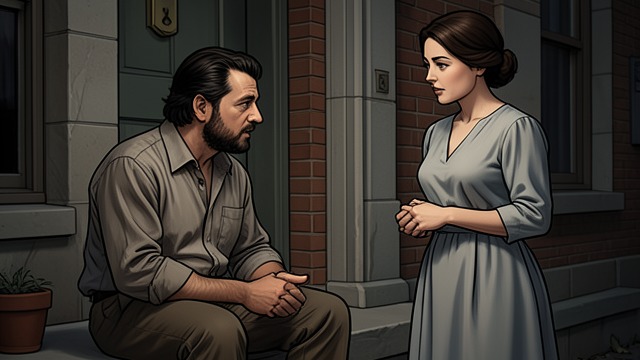
A Friend Who Will Not Change
Franz tries to advise
Reinhold tells Franz that he cannot remain with women for long and has sought help from the Salvation Army. Franz listens with astonishment and promises to assist, believing that Reinhold might learn to treat his partners more humanely.
Friendship becomes intervention
Franz encourages Reinhold to keep Trude instead of discarding her and warns him that repeatedly abandoning women is cruel. Reinhold does not accept the lesson, but Franz’s concern is not merely comic: he wants to see his friend escape a destructive habit.
The effort reveals a mismatch between them. Franz believes friendship means helping another person become better; Reinhold experiences that help as a challenge to his freedom and a quiet claim of superiority.
The Car and the Severed Arm

Friendship Turns Violent
A criminal outing
Franz joins Pums’s gang believing he will help with legitimate goods. Reinhold accompanies him, and Franz seeks reassurance that his advice about women has been right. The encounter retains the tone of camaraderie even as Franz fails to see the criminal danger around him.
Betrayal on the road
After the burglary, Reinhold helps throw Franz from the moving car and the vehicle runs over him. Franz loses his arm but does not expose Reinhold, preserving the remnants of his loyalty even when the friendship has become an act of violence.
The betrayal leaves Franz unable to reconcile the caring companion he imagined with the man who mutilated him. Reinhold, meanwhile, treats the injury as proof that he has escaped Franz’s influence.
A Reunion Built on Shame

Meeting Again
Franz returns to Reinhold
After recovering, Franz visits Reinhold instead of confronting him with a demand for justice. He wants to face the man who injured him and prove that he is no longer afraid, but his trembling betrays how deeply the encounter still affects him.
A cruel imitation of intimacy
Reinhold studies Franz’s missing arm, fills its empty sleeve with clothing, and jokes about the difficulty of dressing as a cripple. Franz allows the humiliating exchange to continue, ashamed that he has come seeking contact from the person who harmed him.
The meeting offers Reinhold a sense of power and gives Franz a confused feeling of renewed closeness. Their relationship has become a dangerous mixture of longing, humiliation, and aggression.
Mieze Between the Friends

Intimacy Becomes a Weapon
Franz shows off his love
Franz tells Reinhold about Mieze and reveals how devoted she is. Believing that her affection might help reform his friend, he allows Reinhold to see her and treats the meeting as a demonstration of the kind of relationship Reinhold has never sustained.
Reinhold’s possessive turn
Reinhold interprets Franz’s happiness as provocation and begins arranging private meetings with Mieze. He uses the language of friendship to gain access, then isolates her and murders her when she resists his demands.
The supposed brotherhood between the men has become a struggle over power and possession. Franz’s wish to prove his loyalty and strength gives Reinhold an opening to hurt him through the person he loves most.
Recognition Without Reconciliation

The Last Look
Franz gives evidence
At Reinhold’s trial, Franz speaks about their relationship and describes Reinhold’s compulsive pursuit of women. He does not use the witness stand to settle every grievance between them or to turn his own injury into a complete account of the past.
Affection survives judgment
Franz looks at Reinhold with a strange, lingering affection, even as Reinhold faces a long prison sentence for Mieze’s murder. The feeling does not absolve Reinhold or restore their friendship; it reflects the complicated attachment that remains after betrayal.
Franz’s response differs from the old desire to prove himself through conflict. He can see Reinhold clearly without pretending that the man is harmless, and without believing that revenge will return what was lost.
Early 1928, after Franz returns to selling newspapers
Spring 1928
Sunday night, April 8, 1928
August 1928
Late August to September 1, 1928
During the trial of Reinhold in the winter of 1928–29
